What to Do When Your Car Overheats
Learn the safest steps to take when your engine overheats and when it’s time to call for roadside assistance.
An overheating engine usually means the cooling system is not removing enough heat. Several issues can cause this, including low coolant, a damaged radiator, a faulty thermostat, or a problem with the cooling fan.
Common causes include:
Knowing the warning signs can help you react before the problem becomes more serious.
Signs Your Car Is Overheating
Your vehicle may give you several warnings before the engine reaches a dangerous temperature.
Look for:
If you notice these signs, do not keep driving just to reach your destination.
What to Do When Your Car Overheats
1. Turn Off the Air Conditioning
If your temperature gauge starts rising, turn off the air conditioning. This can reduce some of the load on the engine.
If the temperature continues to rise, look for a safe place to pull over.
2. Pull Over Safely
Find a safe location away from traffic and stop the vehicle. Turn on your hazard lights if you are stopped near a roadway.
Your priority should be getting yourself and your passengers somewhere safe.
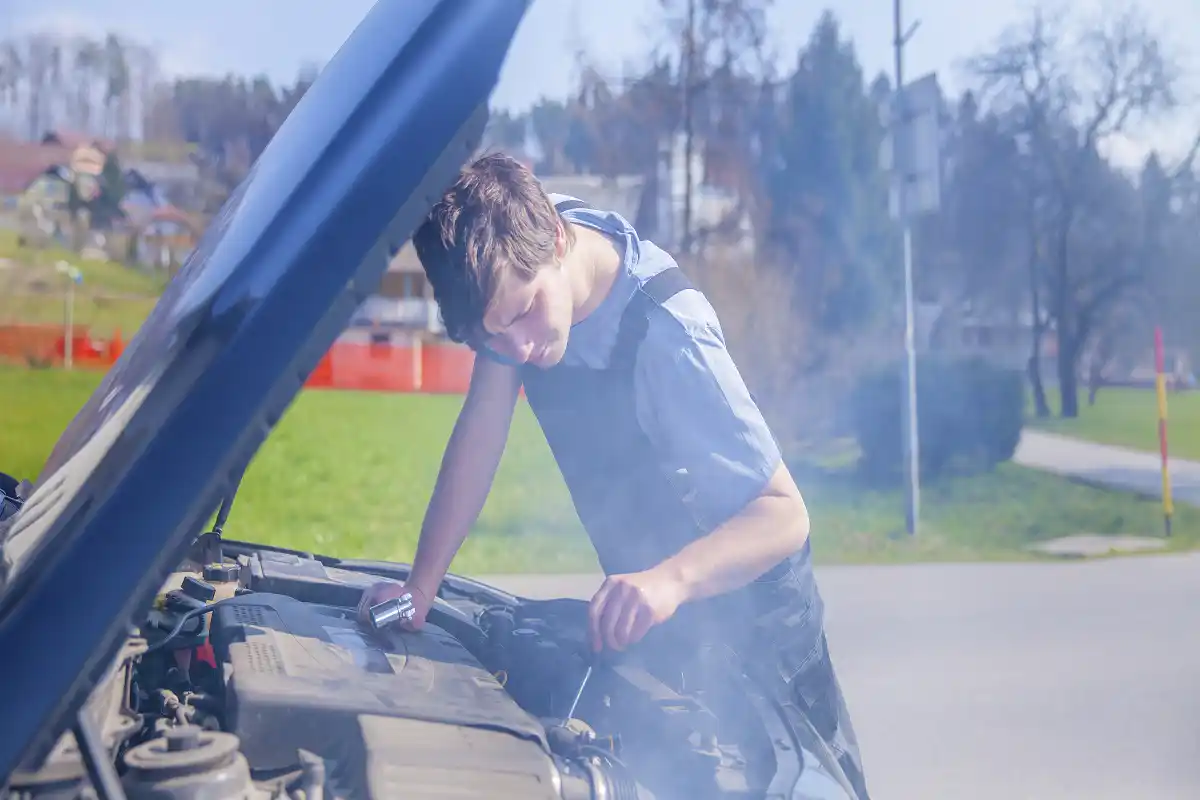
3. Turn Off the Engine
Once you are safely parked, turn off the engine and allow it to cool.
Never continue driving an overheating vehicle. Doing so can turn a manageable cooling-system problem into expensive engine damage.
4. Do Not Open the Radiator Cap
A hot cooling system can be under significant pressure.
Do not remove the radiator cap while the engine is hot. Hot coolant or steam can cause serious burns.
Wait until the engine has cooled before checking anything under the hood.
5. Check for Obvious Problems
Once the vehicle has cooled sufficiently, you can look for obvious signs of trouble.
Check for:
If you are unsure what you are looking at, it is safer to wait for professional assistance.
If you are unsure what you are looking at, it is safer to wait for professional assistance.
Should You Add Coolant?
If the engine has completely cooled and the coolant level is low, adding the correct coolant may help in some situations.
However, do not pour cold water or coolant into a very hot engine.
If you see a major leak, coolant is quickly disappearing, or the vehicle overheats again after adding coolant, stop driving and call for professional roadside assistance.