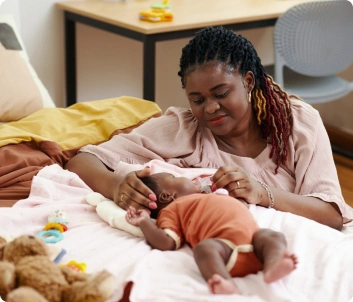
The postpartum period, often called the “fourth trimester,” is a time of significant healing and adjustment. After childbirth, your body and mind go through many changes as you recover and bond with your baby. Here’s what you need to know to navigate postpartum recovery effectively.
Physical Recovery After Childbirth
Vaginal Birth Recovery
- Perineal Discomfort: Healing stitches or tears may take a few weeks.
- Lochia: Postpartum bleeding and discharge can last up to six weeks.
- Pelvic Floor Exercises: Gentle Kegel exercises can help strengthen pelvic muscles.
Cesarean Section Recovery
- Incision Care: Keep the area clean and dry; avoid heavy lifting.
- Pain Management: Take prescribed medications or over-the-counter pain relievers as needed.
- Activity Restrictions: Gradually ease back into physical activity over 6-8 weeks.
General Tips for Physical Recovery
- Rest: Sleep whenever possible, even if it’s in short bursts.
- Nutrition: Focus on nutrient-dense foods to support healing and energy.
- Hydration: Drink plenty of water, especially if breastfeeding.
Emotional Well-Being
Baby Blues vs. Postpartum Depression
- Baby Blues: Feelings of sadness, irritability, or overwhelm are common and typically resolve within two weeks.
- Postpartum Depression: Persistent feelings of sadness, anxiety, or hopelessness may require professional support. Don’t hesitate to reach out to your doctor or a counselor.
Coping Strategies
- Seek Support: Lean on family, friends, or support groups.
- Communicate: Share your feelings with your partner or trusted individuals.
- Practice Self-Compassion: It’s okay to prioritize your own well-being.
Breastfeeding and Lactation
- Latching Challenges: Work with a lactation consultant if you experience difficulties.
- Milk Supply: Stay hydrated and consider galactagogues (foods or supplements that may boost milk supply).
- Nipple Care: Use lanolin or nipple shields to prevent soreness or cracking.
Building a Support System
- Partner Involvement: Encourage your partner to take an active role in caregiving.
- Family Help: Don’t hesitate to accept offers for meals, cleaning, or babysitting.
- Professional Assistance: Postpartum doulas or therapists can provide additional support.
When to Call a Doctor
Physical Symptoms
- Heavy bleeding (soaking a pad in under an hour)
- Signs of infection (fever, swelling, or severe pain)
- Persistent or worsening pain
Emotional Concerns
- Feelings of hopelessness or inability to care for yourself or your baby
- Thoughts of self-harm or harming the baby
Conclusion
Postpartum recovery is a journey, and every mom’s experience is unique. Give yourself grace as you adjust to life with your new baby. Remember, seeking help when you need it is a sign of strength, not weakness. With time, care, and support, you’ll find your rhythm as a mother.