The Scent Story
- Robel
- No Comments
How Fragrance Transforms Your Home
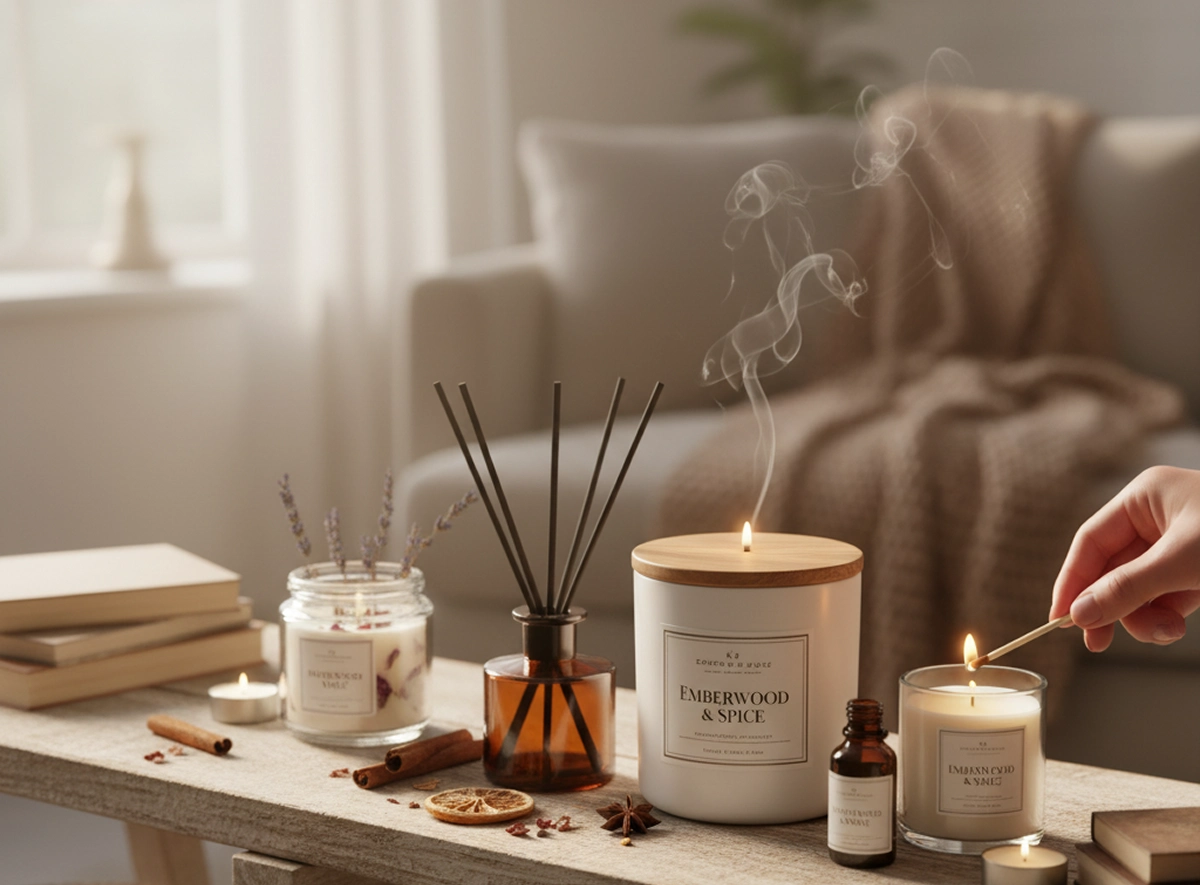
Scent is the most powerful sense tied to memory and emotion. A simple aroma—a hint of vanilla, the crispness of pine, the warmth of amber—can instantly transport you across time and space. Candles, then, are not just home decor; they are potent tools for creating a unique, deeply personalized atmosphere in your living space.
This is the art of the Scent Story—using fragrance to manage your mood, define your rooms, and build a cohesive, memorable environment.
The Invisible Architecture of Mood
Think of fragrance as an invisible layer of architecture. It can make a small room feel grand, a cold room feel cozy, or a chaotic room feel calm. Your mind processes scent immediately, triggering emotional responses far faster than sight or sound.
Using Fragrance to Manage Your Mood
- For Waking Up and Focus: Choose bright, stimulating scents like Citrus (Lemon, Grapefruit) or Mint (Peppermint, Eucalyptus). Lighting one of these in your kitchen or home office signals energy and clarity.
- For Relaxation and Unwinding: When the day is over, switch to soothing notes like Lavender, Chamomile, or Sandalwood. These scents are scientifically proven to promote calm and prepare the body for rest.
- For Romance and Connection: Deep, sensual aromas such as Musk, Amber, or Rosewood create a grounded, intimate atmosphere perfect for date nights or quiet evenings.
Maximizing Your Candle’s “Throw”
The scent throw is how far and wide your candle’s fragrance reaches. You need to know the difference between hot throw and cold throw to get the best performance.
Understanding Cold vs. Hot Throw
- Cold Throw ($\text{H}3$): This is the scent you smell when the candle is unlit. It’s important for when you shop, but it’s not the full story.
- Hot Throw ($\text{H}3$): This is the true fragrance released when the wax is fully melted. It is always more intense and multi-layered than the cold throw.
- The Science of Vaporization ($\text{H}3$): A large, even melt pool (as discussed in Candle Care 101) is critical. The larger the surface area of melted wax, the more fragrance is vaporized into the air, leading to a stronger, more even throw across the entire room.
Choosing Scents for Different Zones
The key to a cohesive Scent Story is assigning the right fragrance to the right area. You want to avoid scent clashes when moving from room to room.
The Entrance (First Impressions)
- Goal: Welcoming and comforting.
- Best Scents: Light, crowd-pleasing notes like fresh linen, subtle vanilla, or soft fig. You want to set a warm tone without overwhelming guests.
The Living Room (The Heart of the Home)
- Goal: Cohesion and warmth.
- Best Scents: This is where you can be bolder. Use seasonal notes (pumpkin spice in fall, balsam in winter) or classic home fragrances like cedar, vetiver, or warm woods.
The Kitchen and Dining Area (Avoiding Clashes)
- Goal: Freshness, or nothing at all during a meal.
- Best Scents (When not eating): Herbaceous or clean aromas like basil, rosemary, or pure lemon.
- A Crucial Tip ($\text{H}3$): Never light a strongly scented candle during dinner. The fragrance will compete with your food, flattening the culinary aromas. Opt for unscented candles for the dining table.
The Bedroom (Sanctuary and Sleep)
- Goal: Relaxation, intimacy, and a gentle transition to sleep.
- Best Scents: Soft, skin-like fragrances. Think soft cotton, light patchouli, sandalwood, or lavender. Keep the fragrance subtle; strong scents can interfere with sleep.
Layering Scents for Depth
To create a truly sophisticated Scent Story, don’t rely on just one candle. Combine complementary scents to build a complex, signature aroma that is unique to your home.
How to Layer Fragrance Successfully
- Start with a Base: Choose a grounding scent (like a wood or musk) for the largest area. This is your foundation.
- Add a Complementary Accent: In an adjacent area, light a fragrance that shares a note with the base but adds contrast. For example, if your base is Cedarwood, add a Citrus scent in the next room. The citrus will lift the wood note.
- Avoid Competition: Never pair two intensely sweet or two intensely floral scents right next to each other. This results in a jarring, competing aroma rather than a harmonious blend. The scents should whisper to each other, not shout.
Conclusion
Your home’s fragrance is just as important as the paint color on your walls. By intentionally choosing and caring for your candles, you are curating an emotional experience for yourself and your guests. Start building your Scent Story today, turning every moment at home into a beautifully scented occasion.
Related Post