Eco-Friendly Candles for Mindful Living
- Robel
- No Comments
In a world increasingly focused on health and environmental responsibility, our choices for the home matter more than ever. Candles are no exception. The traditional, mass-produced candle can often introduce chemicals and soot into your air, but the modern market offers beautiful, high-performance alternatives.
Switching to an eco-friendly candle is not just a trend; it’s a commitment to cleaner air in your home and a healthier planet. This guide breaks down what makes a candle truly “sustainable” and how to find the best options.
The Problem with Traditional Wax
Most conventional candles are made from paraffin wax, a byproduct of the crude oil refining process. While inexpensive and effective, paraffin comes with environmental and health concerns.
Paraffin Wax and Your Air Quality
- Soot and Toxins ($\text{H}3$): When burned, paraffin releases black soot (which dirties your walls and lungs) and can emit volatile organic compounds (VOCs) like toluene and benzene. While the amounts are small, regular use impacts indoor air quality.
- A Non-Renewable Resource ($\text{H}3$): Because it is derived from petroleum, paraffin is a non-renewable, fossil fuel-based product, which contradicts sustainable consumption goals.
The Clean Wax Alternatives: Soy, Coconut, and Beeswax
The foundation of a sustainable candle is its wax. Choosing a plant-based or natural wax ensures you are supporting renewable agriculture and breathing cleaner air.
Soy Wax: The Sustainable Staple
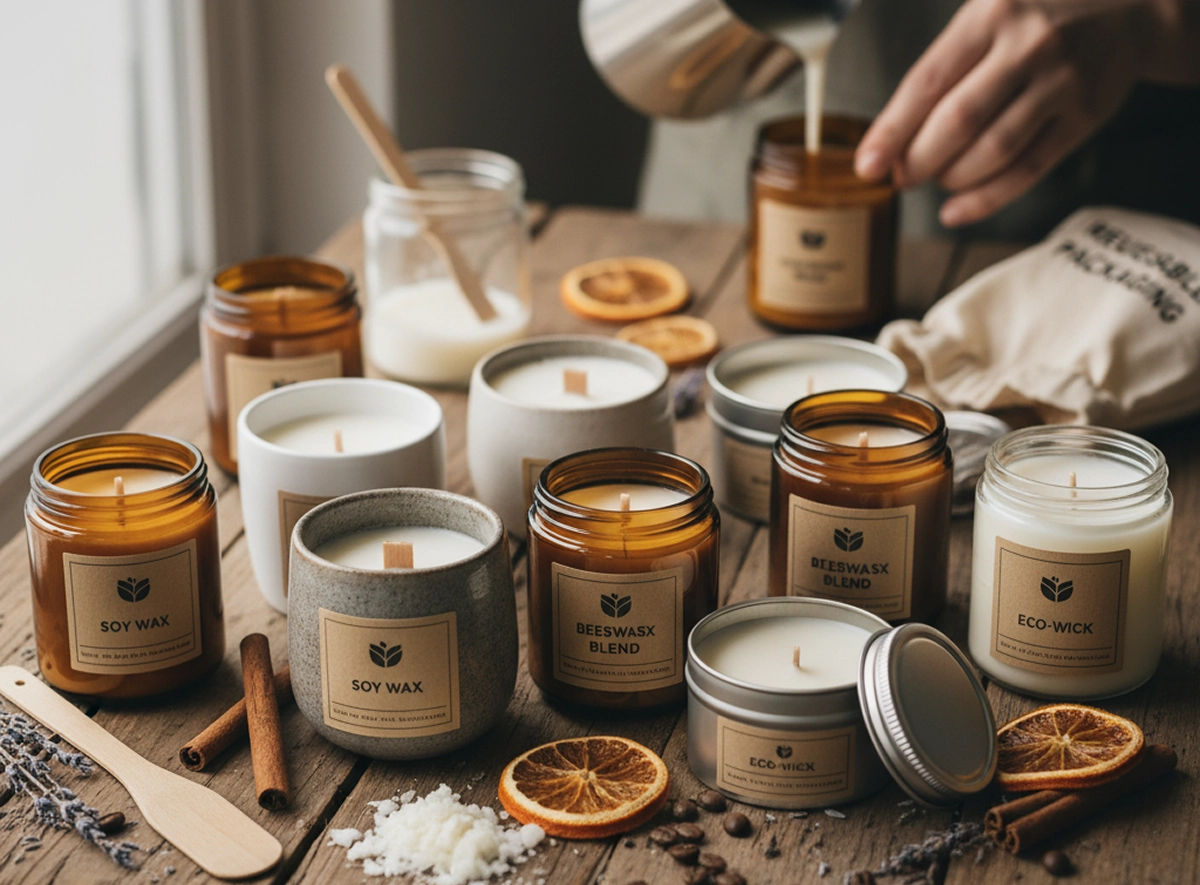
Soy wax is made from soybean oil, a renewable resource. It is the most popular choice for eco-conscious brands.
- Clean Burning ($\text{H}3$): Soy burns with virtually no soot and at a slower rate than paraffin, meaning your candle lasts longer.
- Sourcing Concerns ($\text{H}3$): Always look for brands that use 100% soy wax (not soy blends) and, ideally, soybeans that are sustainably sourced or certified non-GMO to mitigate concerns about monocropping.
Coconut Wax: The Luxury Alternative
Coconut wax is derived from coconut oil, making it exceptionally sustainable due to the high yield and fast-growing nature of the crop.
- Excellent Scent Throw ($\text{H}3$): Coconut wax has a lower melting point, which allows it to release fragrance particularly well. It is often considered the best choice for scent performance in natural waxes.
- The Blend Reality ($\text{H}3$): You will rarely see a pure coconut wax candle, as the texture can be too soft. It is usually blended with a small amount of soy or another natural wax to improve firmness and burn structure.
Beeswax: The Timeless, Hypoallergenic Choice
Beeswax is a completely natural, non-toxic wax produced by honeybees. It is the oldest known candle wax.
- Hypoallergenic Benefits ($\text{H}3$): Beeswax is often the best choice for individuals with allergies or sensitivities. Some studies suggest it can even purify the air by releasing negative ions.
- The Ethical Consideration ($\text{H}3$): Choosing beeswax requires supporting responsible beekeeping practices. Look for brands that source their wax ethically from suppliers who prioritize the health and sustainability of their bee colonies.
Beyond the Wax: Wicks, Fragrance, and Vessels
A sustainable candle is holistic; the wax is just the starting point. True mindful living requires scrutinizing every component.
The Right Wick
- Avoid Lead and Metal: Always choose 100% cotton or wooden wicks. Steer clear of traditional wicks that might contain a metal core (often lead or zinc) for rigidity, as these can release harmful particles when burned.
- Wooden Wicks ($\text{H}3$): These are sustainable, clean-burning, and offer a cozy, crackling sound—a sensory bonus! Ensure they are sourced from Forest Stewardship Council (FSC) certified wood.
The Fragrance Oil Debate
- The Best Choice: Essential Oils ($\text{H}3$): Fragrancing with 100% pure essential oils is the gold standard for clean air. The aromas are genuine, derived directly from plants, and offer aromatherapy benefits.
- The Common Choice: Phthalate-Free Oils ($\text{H}3$): Most luxury candles use a blend of essential oils and synthetic fragrance oils to achieve complex or stronger scents. Critically, these synthetic oils should always be labeled Phthalate-Free. Phthalates are chemicals linked to endocrine disruption and are a major non-negotiable for clean candles.
Vessel Reuse and Recycling
A high-quality container should be designed for a second life.
- Repurposing ($\text{H}3$): Look for jars with simple, classic designs and removable labels. Once the candle is finished (remember the ¼ inch rule!), the jar can be easily cleaned and used for storage, desk supplies, or as a small drinking glass.
- Glass and Ceramic ($\text{H}3$): These materials are durable and widely recyclable. Try to avoid highly complex or multi-material containers that make disposal difficult.
Conclusion
Choosing a sustainable candle means making a conscious decision about what you invite into your personal space. By prioritizing plant-based waxes, lead-free wicks, and phthalate-free fragrances, you invest in a product that performs beautifully while supporting a mindful, clean lifestyle. Enjoy the glow knowing you’ve made a choice that’s better for your health and the planet.
Related Post