Complementing Your Decor
- Robel
- No Comments
We often talk about candles in terms of scent, but their true power in home design is visual. A well-placed candle—unlit during the day, glowing warmly at night—is a non-negotiable accessory. It adds height, texture, and a touch of effortless luxury.
The goal of Candle Pairing Perfection is to use candles not as standalone items, but as essential components of a styled vignette, ensuring they harmonize with your furniture, materials, and overall aesthetic.
Styling: Candles as Decorative Anchors
In interior design, a vignette is a small, intentional arrangement of objects designed to draw the eye and tell a story. Your candle should be the anchor of this story.
The Rule of Three (and Odd Numbers)
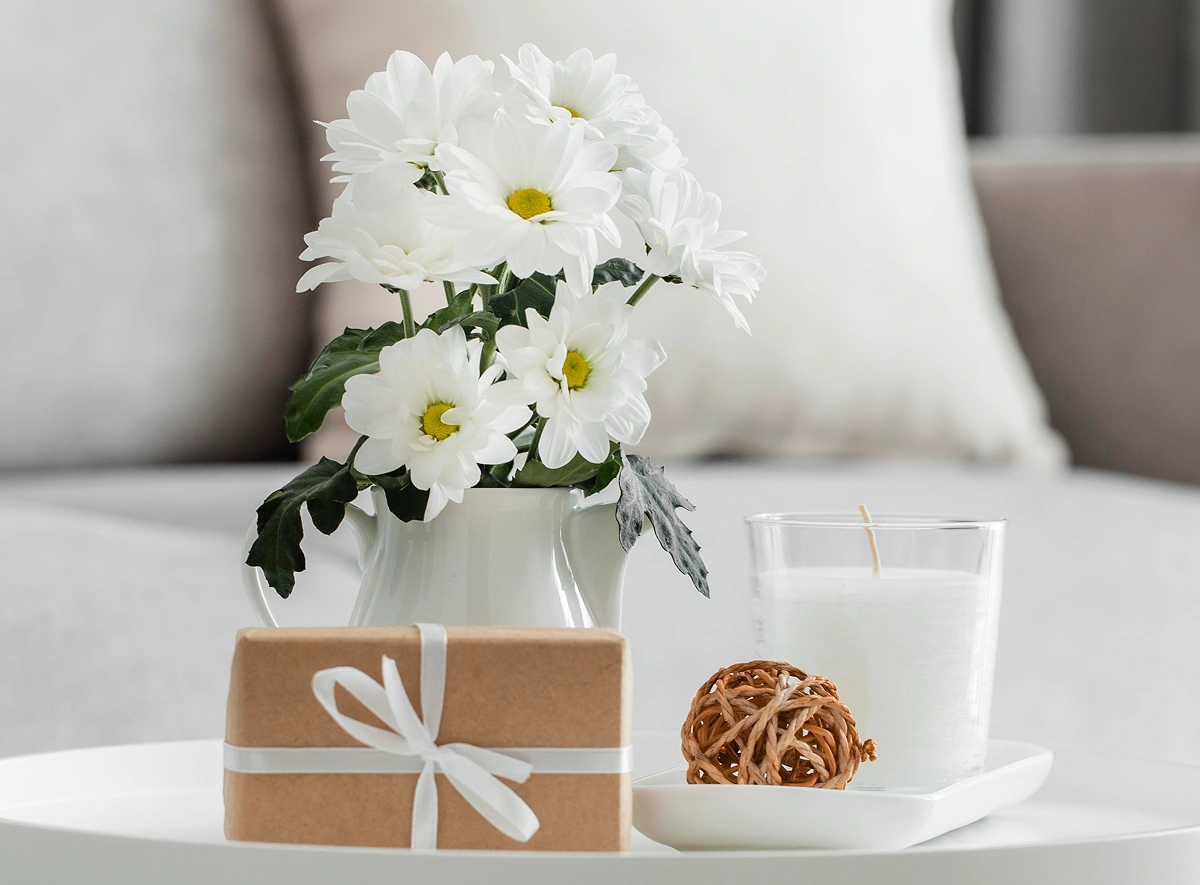
- Create Visual Interest ($\text{H}3$): Interior designers rely on odd numbers (3, 5, 7) for arrangements. A single candle can look lonely. Group your candle with at least two other, distinctly different items (e.g., a book stack and a vase) to create a cohesive vignette.
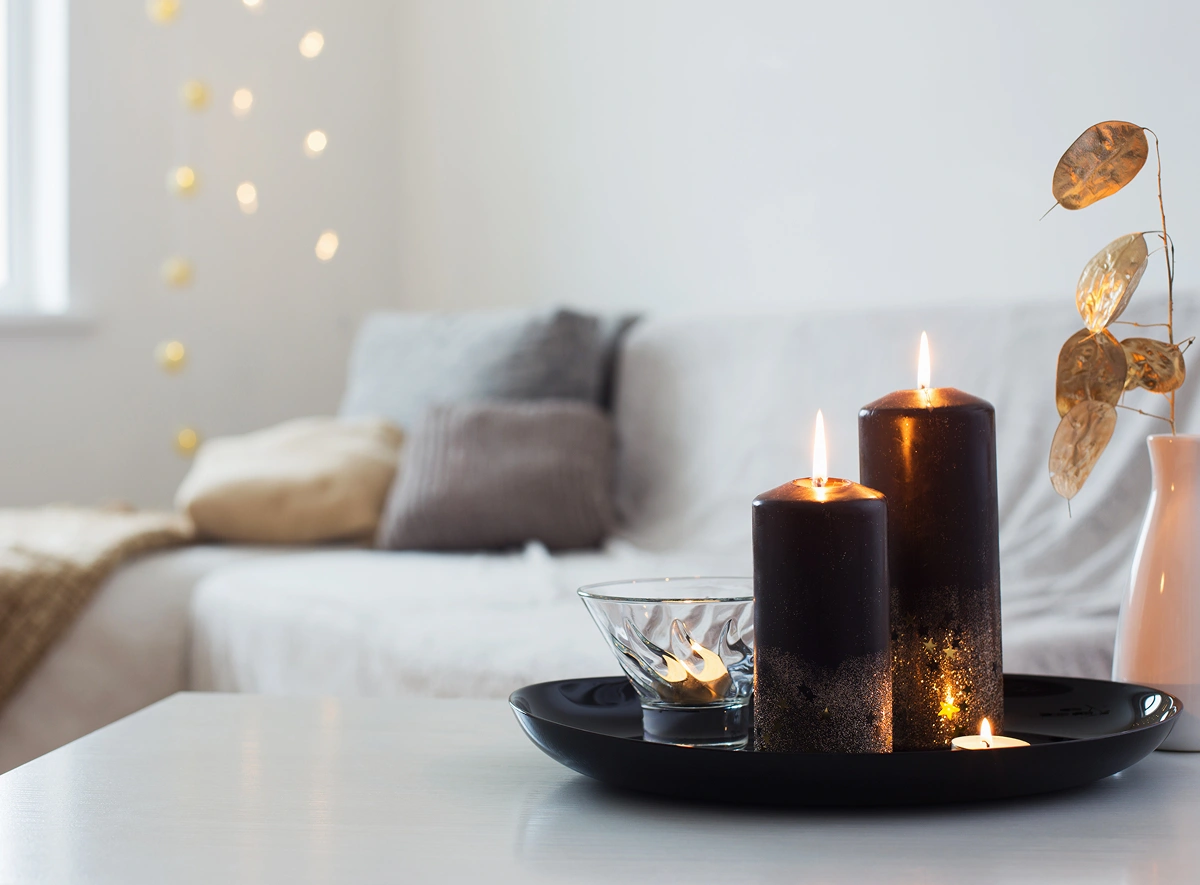
- Vary the Height ($\text{H}3$): Mix up your candle types. Pair a chunky pillar candle with a shorter, wider jar candle and perhaps a small votive. This variation in height adds depth and dynamism to the display.
Choosing the Right Vessel
The container is the accessory, especially during the day when the candle is unlit.
- For Minimalist/Modern Decor ($\text{H}3$): Opt for vessels made of clean materials like matte black ceramic, glossy white porcelain, or simple, clear glass. The emphasis should be on geometry and structure.
- For Rustic/Bohemian Decor ($\text{H}3$): Choose candles in textured terra cotta, weathered wood, or colored glass. These materials add an organic, tactile feel that complements natural fibers and earth tones.
- For Traditional/Glam Decor ($\text{H}3$): Look for metallic finishes—gold, silver, or mercury glass. Tapered candles in elegant brass or crystal holders are perfect for adding height and sophistication to a mantel or dining table.
The Glow-Up: Maximizing Nighttime Ambiance
When evening falls, the candle transitions from a visual object to a source of light and warmth. This is where strategic placement really pays off.
Using Reflection to Amplify Light
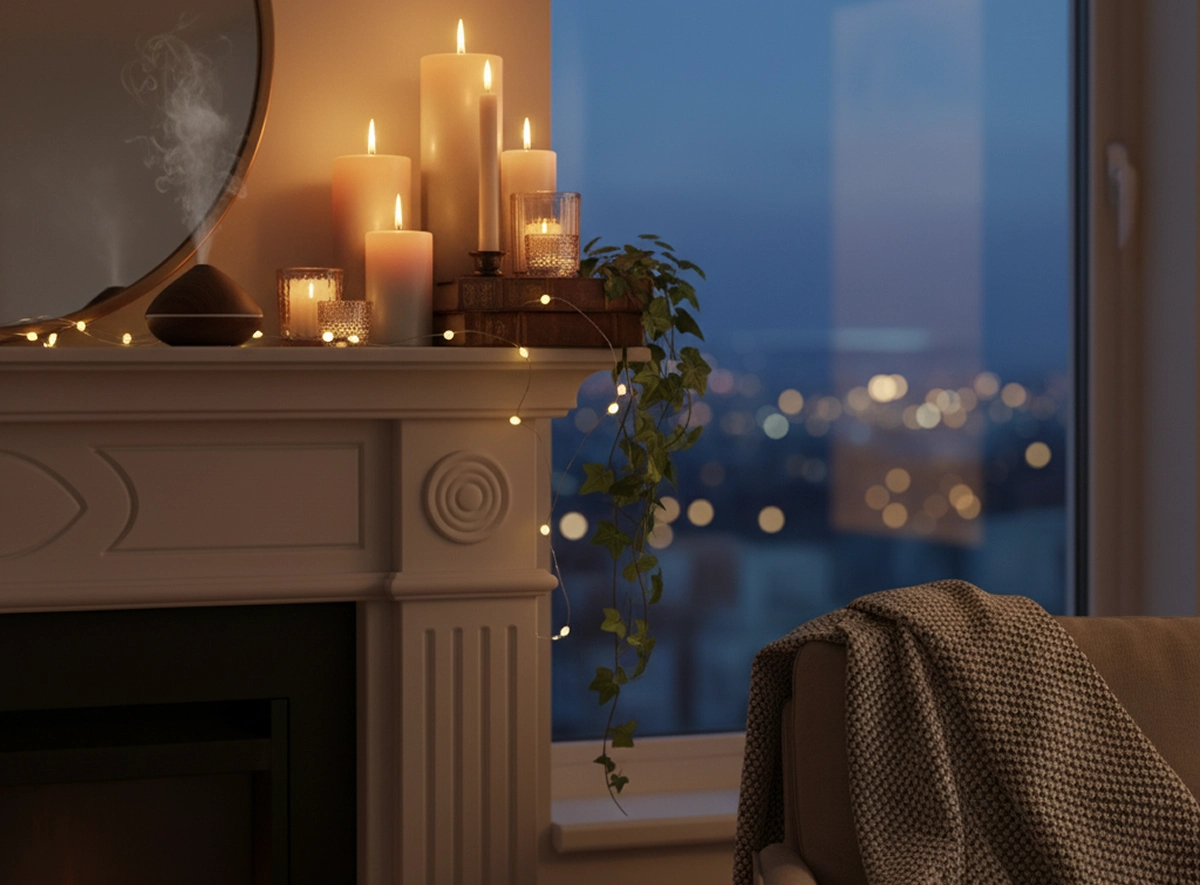
- Place Near Mirrors: As seen in our night-view image, positioning lit candles near a round mirror doubles the light and creates an illusion of depth and drama. The warm glow bounces back into the room, magnifying the cozy factor.
- On Glass Surfaces: Use a reflective glass or mirrored tray underneath your candle grouping. This protects the surface and allows the soft candlelight to spread and reflect, making the display feel more intentional and luxurious.
Strategic Lighting for Cozy Zones
Use candles to define specific zones and replace harsh overhead lighting.
- The Reading Nook: Place a single, softly scented candle next to an armchair or on a bedside table with a cozy throw blanket (like the one in our visual). The low, warm light signals relaxation and focus.
- The Dining Table: Tall, slender taper candles are classic. Their height elevates the eye and the flickering flame is inherently romantic. Crucially, ensure the flame height is above or below eye level when seated to avoid distraction or glare.
Integrating Color and Texture
Think of your candle’s color as a swatch of paint or fabric. It must harmonize with its surroundings.
The Art of Color Matching
- Complementary Tones: Choose candle wax that closely matches or subtly contrasts with an accent color already in the room (e.g., pairing a sage-green candle with throw pillows that have a hint of green embroidery).
- Seasonal Shifts: Candles offer an easy way to change your room’s mood seasonally. Use bright, crisp white or pastel candles for spring and summer, and switch to deep burgundies, emerald greens, or warm creams for autumn and winter.
Pairing Textures
The materials surrounding your candle should enhance its presentation.
- Soft vs. Hard: If your candle is in a sleek, hard ceramic jar, place it on a soft woven coaster or next to a stack of fabric-covered books. This contrast makes both items stand out.
- Organic Contrast: Candles look beautiful when paired with natural, organic elements. A small potted succulent, a bowl of decorative stones, or a simple sprig of greenery adds life and earthiness to the composition.
Conclusion
Candles are a designer’s secret weapon. They are affordable, flexible, and immediately elevate the atmosphere of any room. By paying attention to scale, vessel material, and strategic nighttime placement, you can move beyond just “burning a candle” to genuinely decorating your space. Use them to anchor a stunning vignette and transform your home from a collection of objects into a warm, inviting sanctuary.
Related Post