

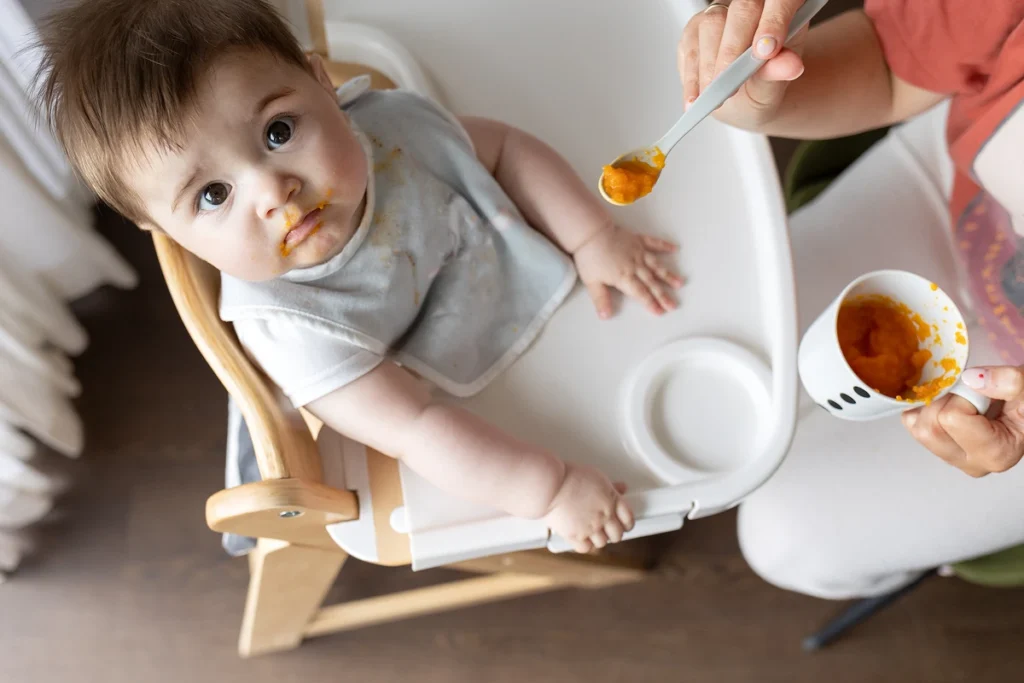

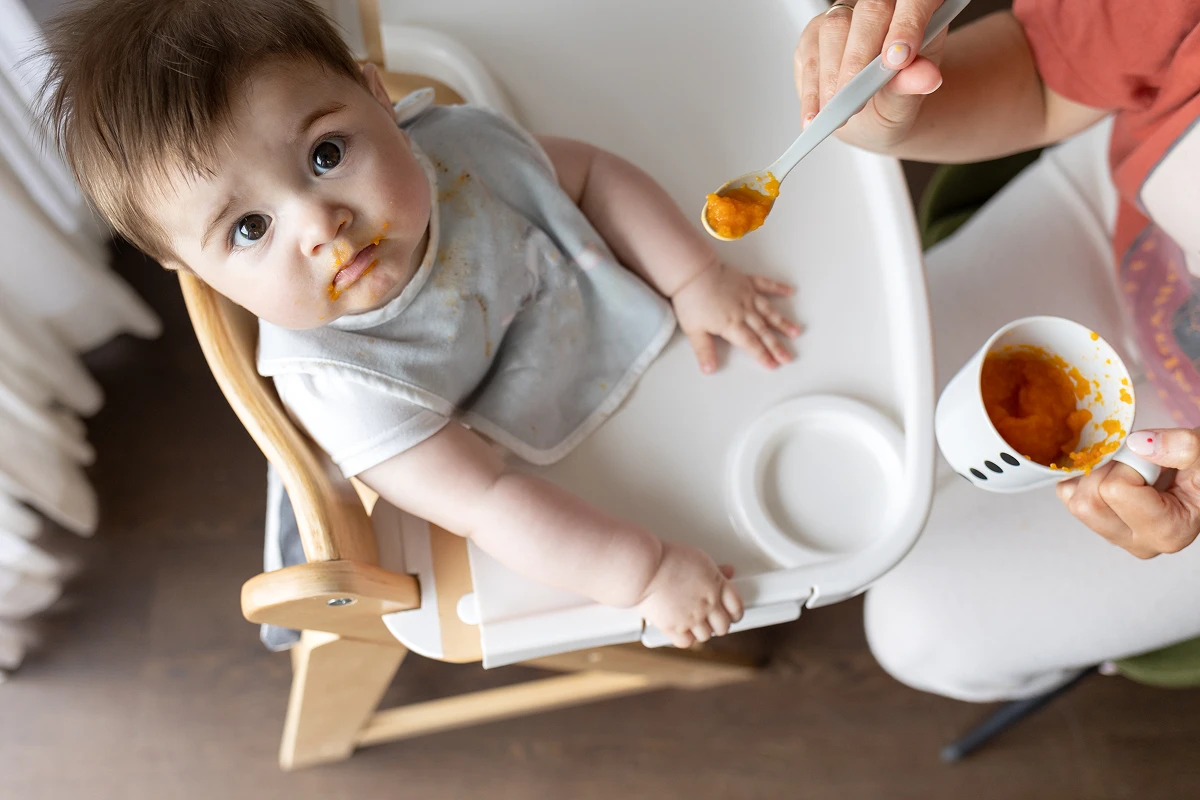
The journey from milk to meals is a big milestone for your baby. Around 6 months of age, most infants are ready to try solids, and it’s both exciting and a little nerve-wracking for parents. Here’s how to start solids safely and confidently.
When to Start Solids
Signs your baby is ready include:
- Sitting up with minimal support
- Showing interest in your food
- Loss of the tongue-thrust reflex (pushing food out with the tongue)
Always check with your pediatrician before introducing solids.
Best First Foods
Start with single-ingredient, easy-to-digest options:
- Pureed carrots, sweet potatoes, or squash
- Mashed bananas or avocados
- Iron-fortified single-grain baby cereal
Introduce one food at a time and wait 3–4 days before trying another to check for allergies.
Building a Balanced Diet
Gradually introduce protein (lentils, chicken puree), dairy (full-fat yogurt), and finger foods like soft fruits or steamed veggies. By 9–12 months, babies can often eat small portions of family meals.
Foods to Avoid in the First Year
- Honey (risk of botulism)
- Whole nuts or hard foods (choking hazard)
- Added salt and sugar
- Cow’s milk as a main drink (can be introduced after 12 months)
Tips for Stress-Free Feeding
- Embrace the mess—babies learn by exploring.
- Don’t force-feed; let your baby decide how much to eat.
- Keep mealtimes positive and pressure-free.